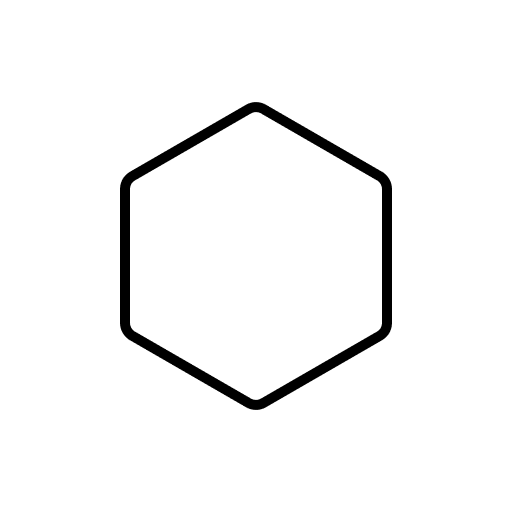
Hình lục giác
The hexagon is a natural form symbolizing harmony, efficiency, and beauty. In branding, hexagons convey inner peace, symmetry, and reciprocity. This shape is associated with honeycombs, crystalline structure, and natural organization. Hexagon creates a sense of balance, abundance, and freedom.

🧠 Tâm lý Hình dạng
Hexagons evoke feelings of harmony, tranquility, and natural order. They activate the Sage, Caregiver, and Ruler archetypes, creating an atmosphere of balance and efficiency. Hexagon is the most efficient shape in nature (honeycombs), symbolizes optimization, teamwork, and sweet life.
Liên kết
✓ Khi nào Sử dụng
• Use hexagons for ecological brands, technology companies, chemical industry, medical organizations. Effective for conveying natural efficiency, structure, and innovation. Ideal for brands wanting to emphasize harmony, symmetry, and scientific approach. Work excellently in modular design systems.
✗ Tránh Nếu
• Avoid hexagons if simplicity or emotionality is needed. Shape may be perceived as too technical or scientific. Not suitable for entertainment brands, children's products, or emotional services. Hexagons may seem cold for luxury fashion brands.
💡 Mẹo Thiết kế
Use hexagons to create modular patterns (honeycombs). Combine with yellow and gold for honey and abundance associations. Hexagonal grid is ideal for technical and scientific presentations. Work excellently in design for chemistry, biology, and nanotechnology.
Ví dụ Sử dụng
Tổ ong lục giác
Cấu trúc lục giác tượng trưng cho hiệu quả, ngọt ngào và trí tuệ tự nhiên
Công thức hóa học
Vòng benzen và nhiều phân tử khác thường có cấu trúc lục giác
Hệ thống mô-đun
Các lục giác khớp khít, tạo họa tiết liền mạch
Ví dụ Thương hiệu
NBC
Six colored hexagons form peacock — symbol of color TV quality
Chase Bank
Octagonal logo shape conveys stability, but hexagons in design — harmony
Honeycomb Cereals
Hexagonal cereals directly reference honeycombs and sweetness
Trong cơ sở dữ liệu này
- Nguyên mẫu
- 3 trong tổng số 12
- Cùng bộ nguyên mẫu
- 1 trong tổng số 20
- Nguyên mẫu hiếm nhất
- Người cai trị — 5 trong tổng số 20
Nguyên mẫu
3




Cập nhật: