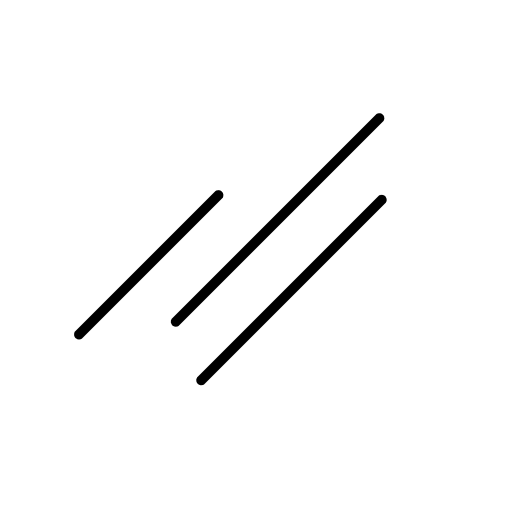
斜線
Diagonal lines are a symbol of struggle, movement, and overcoming. In branding, they convey dynamics, energy, and change. The right diagonal (ascending) is associated with growth and success, the left (descending) — with fall or descent. Diagonals are the most active and tense of all lines.

🧠 形状の心理学
Diagonal lines evoke feelings of movement, tension, and overcoming passivity. They activate the Creator, Explorer, Hero, and Rebel archetypes, creating an atmosphere of action and change. Diagonals disrupt calmness, attract attention, and create visual interest. They symbolize progress and transformation.
関連付け
✓ 使用する場合
• Use diagonal lines for sports brands, tech startups, creative agencies, transport companies. Effective for creating dynamic compositions, directing gaze, and emphasizing important elements. Ideal for brands wanting to emphasize innovation and forward movement.
✗ 避けるべき場合
• Avoid diagonal lines if stability or formality is needed. Not suitable for conservative financial institutions, classic luxury brands, or medical facilities. Too many diagonals can create chaos and disorientation.
💡 デザインのコツ
Use ascending diagonals (left to right up) to convey growth and success. Combine diagonals with bright colors to enhance energy. Diagonal text placement attracts attention. Ideal for creating a sense of speed in automotive design.
使用例
スポーツロゴ
斜めの要素はスピード、躍動感、競技の成果を伝える。
成長を示す矢印
チャートの右上がりの斜線は進歩と財務上の成功を象徴する。
ダイナミックな構図
斜めに要素を置くと勢いが生まれ、視線を誘導する。
ブランド例
Nike
Swoosh — diagonal checkmark symbolizing movement, speed, and victory
Adidas
Three diagonal stripes convey dynamics, ascent to peaks, and sports spirit
FedEx
Hidden arrow between E and x creates diagonal symbolizing delivery speed
このデータベースでは
- アーキタイプ
- 6 / 12
- 同じアーキタイプの組み合わせ
- 1 / 20
- 最も希少なアーキタイプ
- エクスプローラー — 5 / 20





更新日: